BUKOVINA
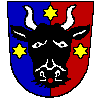 Bukovina: From 1775 to 1918, the easternmost crown
land of the Austrian Empire or Austria-Hungary; now divided between Romania and Ukraine. As
a multi-ethnic province, its name has several spellings: Bukowina
or Buchenland in German, Bukowina in Polish, Bucovina
in Romanian, and Bukovyna in Ukrainian, all of which mean Land
of Beech Trees.
Bukovina: From 1775 to 1918, the easternmost crown
land of the Austrian Empire or Austria-Hungary; now divided between Romania and Ukraine. As
a multi-ethnic province, its name has several spellings: Bukowina
or Buchenland in German, Bukowina in Polish, Bucovina
in Romanian, and Bukovyna in Ukrainian, all of which mean Land
of Beech Trees.
Bukowina: W latach 1775-1918, wysunięty najbardziej na wschód region korony Cesarstwa Austriackiego lub Monarchii Austro-Węgierskiej; jest częścią terytorium współczesnej Rumunii i Ukrainy. Jako prowincja wielokulturowa, przyjmuje różne nazwy: Bukowina lub Buchenland w języku niemieckim, Bukowina w polskim, Bucovina w rumuńskim, i Bukovyna w języku ukraińskim, i w każdym z tych języków oznacza Bukowy Kraj (od nazwy drzewa).
A Short History of Bukovina/Krótka historia Bukowiny
Immigration to Bukovina/Imigracja do Bukowiny
Emigration from Bukovina/Emigracja z Bukowiny
My connection with Bukowina/Mój związek z Bukowiną
A Short History of Bukovina
Bukovina, on the eastern slopes of the Carpathian mountains, was once the heart of the Romanian Principality of Moldavia, with the city of Suceava being made its capital in 1388. In the 15th and 16th centuries, the Painted Monasteries of Arbora, Dragomirna, Humor, Moldovita, Putna, Sucevita, and Voronet were constructed under the patronage of Stefan the Great and his son Petru Rares. With their famous exterior frescoes, these monasteries remain some of the greatest cultural treasures of Romania, today.
Along with the rest of Romania, Bukovina fell under the control of the Ottoman Turks. It remained in Turkish control until it was occupied by the Russians, in 1769, then by the Austrians,in 1774. With the Treaty of Constantinople in 1775, control of Bukovina was given to the Austrian Empire. Administered as a district of the province of Galicia between 1786-1849, Bukovina was granted the status of an separate crown land and duchy in 1849. When the Austrian Empire was reorganized into the Dual Monarchy of Austria-Hungary, in the Compromise of 1867, Bukovina, like Galicia, remained under Austrian administration, while the neighboring province of Transylvania was placed under Hungarian rule.
During World War I, Bukovina became a battlefield between Austrian and Russian troops. Although the Russians were finally driven out in 1917, Austria would lose Bukovina with the war, ceding the province to Romania in the Treaty of St. Germain.
On June 28, 1940, northern Bukovina was occupied by troops from the Soviet Union. It would change hands again during the course of World War II, but this half of Bukovina ended back in Soviet hands, and is today the Chernivetska oblast of Ukraine. Southern Bukovina in now part of Suceava county, Romania.
Krótka historia Bukowiny
Bukowina, kraina położona na wschód od pasma gór Karpaty, leżała kiedyś w sercu Rumuńskiego Księstwa Mołdawii, z miastem Suceava, jego stolicą w 1388 roku. W XV i XVI wieku, za rządów Stefana Wielkiego i jego syna Petru Raresa wybudowano malownicze klasztory w Arbor, Dragomina, Humor, Moldovita, Putna, Sucevita i Woronet. Za sprawą swoich słynnych fresków namalowanych na ścianach od zewnątrz, te klasztory do dziś stanowią jeden z największych skarbów kultury rumuńskiej.
Łącznie z pozostałą częścią terytorium Rumunii, Bukowina znajdowała się po panowaniem Turków Ottomańskich. Pozostawała ona pod panowaniem Turków aż do czasu okupacji rosyjskiej, w 1769 roku, a potem aż do momentu przejęcia jej przez Austriaków w 1774 roku. Na mocy „Traktatu z Konstantynopolu” w 1775 roku, władzę w Bukowinie sprawowało Cesarstwo Austriackie. Stanowiąc pod względem administracyjnym część prowincji Galicji w latach 1786-1849, Bukowina otrzymała status odrębnego kraju korony i księstwa w 1849 roku. Cesarstwo Austriackie zostało przekształcone w Dualistyczną Monarchię tzw. Austro-Węgry, na mocy Porozumienia z 1867 roku, Bukowina, tak jak Galicja pozostała pod panowaniem austriackim, podczas gdy sąsiednia prowincja Transylwania była rządzona przez Węgrów.
Podczas I wojny światowej, Bukowina była polem bitwy, gdzie walczyły ze sobą oddziały austriackie i rosyjskie. Pomimo że Rosjanie zostali wyparci z Bukowiny w 1917 roku, w wyniku wojny Austria straciła Bukowinę, przekazując tę prowincję Rumunii na pomocy Traktatu z St. Germain.
28 czerwca 1940 roku północna Bukowina była okupowana przez Związek Sowiecki. Ponownie dostałaby się ona w inne ręce podczas II wojny światowej, ale ta połowa terytorium Bukowiny znalazła się w końcu w rękach Sowietów, a współcześnie stanowi tzw. Czerniwetską Oblast na Ukrainie. Południowa Bukowina jest obecnie częścią regionu Suceava w Rumunii.
Immigration to Bukovina
Bukovina covers an area of 10,422 square kilometers. In the 1775 census of this province, its population was only about 60,000. To encourage the development of this sparsely-settled land, the Austrian emperors subsidized the immigration of colonists to Bukovina. After end of these official immigration programs, colonists would continue to arrive at their own expense. As a result, by the census of 1910, the population of Bukovina had risen to over 800,000.
People of many different ethnic groups took part in this immigration,
including Germans and Austrians, Armenians, Hungarians, Jews, Poles, Romanians and Ukrainians
(at this time, generally referred to as Ruthenians). German
colonists came from three distinct areas: Swabians and Palatines, from
what is now Baden-Württemberg and Rheinland-Pfalz, a south-western part of Germany;
German Bohemians, from the Bohemian Forest (Böhmerwald), now
in the Czech Republic; and Zipsers, from the Zips mountains, now Spis county,
Slovakia.
Moreover, some German and Austrian colonists, who arrived in Bukovina, came from other parts of the Austro-Hungarian Empire (different locations in Austria and Hungary today).
Imigracja do Bukowiny
Bukowina obejmuje obszar 10.422 kilometrów kwadratowych. Zgodnie z danymi demograficznymi na temat tej prowincji, pochodzącymi z 1775 roku, liczyła ona wtedy tylko około 60.000 mieszkańców. W celu umożliwienia rozwoju tej słabo zaludnionej krainy, austriaccy cesarze sfinansowali imigrację kolonistów do Bukowiny. Po zakończeniu finansowania przez władze tych oficjalnych programów imigracyjnych, koloniści przyjeżdżali tam na własny koszt. Na skutek tego, aż do pojawienia się rejestru ludności z 1910 roku, liczba ludności Bukowiny wzrosła, osiągając pułap ponad 800.000 mieszkańców.
Ludzie z różnych grup etnicznych brali udział w tej imigracji, w tym Niemcy i Austriacy, Ormianie, Węgrzy, Żydzi, Polacy, Rumuni i Ukraińcy (nazywani również Rusinami). Niemieccy koloniści przybywali z trzech różnych miejsc: Szwabowie i Palatyni, z dzisiejszej Badenii-Wirtembergii i Nadrenii-Palatynatu w południowo-zachodnich Niemczech; Niemcy Sudeccy z krainy zwanej dawniej Bohemią, z Lasów Bohemii (Böhmerwald), współcześnie w Republice Czeskiej i Niemcy ze Spiszu, z gór Spiszu, obecnie rejon Spisz na Słowacji.
Ponadto niektórzy niemieccy i austriaccy koloniści, którzy przybyli do Bukowiny, pochodzili z innych części Cesarstwa Austro-Węgier (tj. z dzisiejszej Austrii i Węgier).
Emigration from Bukovina
As the population of Bukovina expanded, so did the pressures for emigration. Farmers with large families could no longer divide their homesteads among their children, and industry in Bukovina had never grown to the extent in had elsewhere in the Austrian Empire, or in the New World.
The first wave of Bukovina German emigration began in the 1880s. Most of these emigrants would settle in communities among their Landsleute. These destinations included Ellis, Kansas; Yuma County, Colorado; Lewis County, Washington; Saskatchewan, Canada; and Rio Negro, Brazil. A second wave of emigration to the Americas took place in the years preceding and following World War I. While some joined those who preceded them in the above mentioned locations, others would find industrial employment in New York City.
World War II would provide the major impetus for the Bukovina Germans to leave their homeland. After the Soviet Union annexed northern Bukovina in 1940 -- while the Molotov-Ribbentrop Pact was still in effect -- an agreement between the Soviet Union and Germany, and a similar agreement between Romania and Germany, allowed the ethnic Germans of Bukovina to voluntarily leave for Germany (this agreement obviously did not include the German-speaking Jews of Bukovina, who -- like Jews all across Europe -- would become victims of the Holocaust during the course of the war).
Nearly all the Catholic and Lutheran Bukovina Germans, some 95,000 people, accepted the terms of this resettlement (Umsiedlung) to the Reich. In 1945, many of these, who were sent to German-occupied land in Poland or Czechoslovakia, would find themselves refugees again, fleeing from the advancing Red Army.
The fate of these Bukovina Germans was determined by their location at the end of the war. Many would settle in West Germany and Austria (with some emigrating to the United States, Canada, and elsewhere), others in East Germany. Some were forced to return to Romania, from where they were finally granted permission to emigrate again to Germany over the following decades. Only a very small minority of Bukovina Germans remain in Romania or Ukraine, today.
Emigracja z Bukowiny
Wraz z rosnącą liczbą mieszkańców, zwiększała się presja emigracji. Rolnicy mający liczne rodziny nie byli w stanie dłużej podzielić przyznanej ziemi między dzieci a przemysł w Bukowinie nigdy nie rozwinął się tak dobrze, jak w innych częściach Cesarstwa Austriackiego lub w Nowym Świecie.
Pierwsza fala niemieckiej emigracji z Bukowiny rozpoczęła się w latach 80. XIX wieku. Większość tych niemieckich emigrantów osiedliła się miejscach, w których mieszkali ich rodacy. Były to takie miejsca jak: Ellis w stanie Kansas, hrabstwo Yuma w Kolorado, hrabstwo Lewis w stanie Waszyngton; Saskatchewan w Kanadzie i Rio Negro w Brazylii. Druga fala emigracji do obu Ameryk miała miejsce w latach poprzedzających I wojnę światową i następujących po niej. Podczas gdy niektórzy spośród nich przyłączyli się do emigrantów osiedlających się we wskazanych lokalizacjach, innym udało się znaleźć pracę w branżach przemysłowych w mieście Nowy Jork.
II wojna światowa w dużej mierze spowodowała, że Niemcy z Bukowiny opuścili swoją małą ojczyznę. Po aneksji północnej Bukowiny przez Związek Radziecki w 1940 roku - gdy Pakt Molotow-Ribbentrop - umowa między Związkiem Sowieckim i Niemcami i podobna umowa między Rumunią i Niemcami-wciąż obowiązywały, Niemcy z Bukowiny mogli bez przeszkód wyjechać do Niemiec (ta umowa nie uwzględniała mówiących po niemiecku Żydów z Bukowiny, którzy - tak jak Żydzi z Europy - stali się ofiarami Holokaustu podczas wojny).
Prawie wszyscy Niemcy z Bukowiny będący katolikami i luteranami, około 95.000 ludzi, zaakceptowali warunki przesiedlenia (Umsiedlung) do Rzeszy. W 1945 roku, wielu z tych Niemców, których wysłano do okupowanej przez Niemcy Polski lub Czechosłowacji, ponownie stało się emigrantami, uciekając przed przemieszczającą się szybko na zachód Armią Czerwoną.
Los tych Niemców z Bukowiny był uwarunkowany miejscem, w którym się znaleźli pod koniec wojny. Wielu osiedliło się w Niemczech Zachodnich i Austrii (niektórzy wyemigrowali do USA, Kanady i różnych innych krajów), inni jeszcze znaleźli się we Wschodnich Niemczech. Niektórzy byli zmuszeni powrócić do Rumunii, a tam w końcu uzyskali pozwolenie, aby wyemigrować ponownie do Niemiec w następnej dekadzie. Obecnie tylko niewielu Niemców z Bukowiny pozostało w Rumunii lub na Ukrainie.
My connection with Bukovina
My great great great grandfather could have come to Bukovina (Czernowitz) from the southern Austria. He could have taken part in the colonialization of a poorly inhabited land of the Austrian Empire. It was possible to find the surname "Gündrich" in Styria and Carinthia (Austrian provinces). Those archive sources proved that my ancestors were Catholics.
However, a few surname records had also been found i.a. in Germany (Baden-Württemberg and Rheinland-Pfalz). The location had been already mentioned in the section on immigration to Bukovia.
As far as I know my great grandfather Karl Gündrich worked as a beer taster in a brewery in Czernowitz, Tschernovitz (located in Ukraine, now). It should be also noted that in the 19th century Czernowitz was a multi-ethnic city populated by i.a. Germans, Austrians and Poles. The follow-up is just my pure imagination. He fell in love with a Polish lady, got married and longed for being Polish.
Mój związek z Bukowiną
Mój pra pra pradziadek mógł przybyć do Bukowiny (Czernowitz) z południowej Austrii. Mógł uczestniczyć w kolonizacji tego słabo zamieszkanego obszaru wchodzącego w skład Cesarstwa Austriackiego. Można było odnaleźć nazwisko "Gündrich" w Styrii i Karyntii (prowincje Austrii). Te źródła archiwalne potwierdziły, że moi przodkowie byli katolikami.
Jednak kilka zapisów dotyczących tego nazwiska odnaleziono również m.in. w Niemczech (Badenia-Wirtembergia i Nadrenia-Palatynat). To miejsce geograficzne zostało już wzmiankowane w części dotyczącej imigracji do Bukowiny.
O ile mi wiadomo mój pradziadek Karol Gündrich pracował jako piwowar w browarze w Czerniowcach (obecnie Ukraina). Należy także odnotować, że w XIX wieku Czerniowce były miastem wielokulturowym zamieszkanym m.in. przez Niemców, Austriaków i Polaków. To co się później stało, to tylko wytwór mojej wyobraźni. Zakochał się w Polce, ożenił się i chciał być Polakiem.