LAIBACH
 LAIBACH INTRO
A SHORT HISTORY OF LAIBACH
LINKS TO OTHER LAIBACH WEBSITES
LAIBACH INTRO
Laibach is an old German
name for Ljubljana, the capital of Slovenia. They were formed in 1980 as
the music wing of an art collective, NSK (Neue Slowenische Kunst - New
Slovene Art), whose members, in a parody of the Communist model of a totalitarian
industrial production, voluntarily renounce their individual names, tastes
and convictions in a joyful subordination to the NSK's collective identity
and political programme. If that suggests to you a vision
of bleak, industrial music, mutant disco beats, and postmodern humour,
then you are spot-on. Laibach musicians have always seen themselves as ideologically
offensive to authority which makes us think of something more than a rock 'n' roll group. In Glenn's Gossling's opinion, they view disco, for example, as an idealized
expression of technical production: an archetype to stimulate automatic
movement and industrial consciousness. Laibach was a name for the most famous underground band in Yugoslavia.
Laibach has been an extremely interesting, artistic phenomenon that involves music and other forms of art: painting, theatre, performance, sculpture. Laibach was
always a threat to the communist system of entire Yugoslavia. Their
music is a fantastic combination of weird, odd, extravagant and strange
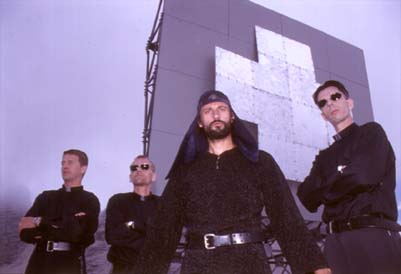
sounds. The musicians (see the picture) are still in search
of their music image. One could find anything in their music: protest song,
industrial, punk, jazz, military march, opera, rock symphony. The lyrics are focused on past
and present political affairs. In general, the band wants us to understand
terrible, totalitarian system effects. They make fun of both nazism and
communism. However, their creativity may be also construed as ambiguous. Sometimes they remix and copy their own way the songs of
other bands (eg. OPUS, The Beatles, The Rolling Stones), just for fun.
Laibach to staroniemiecka nazwa miasta Ljubljana, będącego stolicą Słowenii. Powstali w 1980 roku jako muzyczne skrzydło spółdzielni artystycznej, w skrócie NSK (Nowa Słoweńska Sztuka), której członkowie, parodiując komunistyczny model totalitarnej produkcji przemysłowej, dobrowolnie zrzekli się swoich prawdziwych imion i nazwisk, gustów i przekonań, aby radośnie podporządkować się kolektywnej tożsamości NSK i realizowanemu przez „tę spółdzielnię” programowi. Jeśli te fakty kojarzą ci się z wizją przygnębiającej, industrialnej muzyki, zmutowanymi brzmieniami disco, i z ponowoczesnym poczuciem humoru, zatem trafiłeś w dziesiątkę. Muzycy Laibach zawsze postrzegali siebie silniej przez pryzmat głoszonej, obraźliwej dla władzy ideologii, co każe nam myśleć o czymś więcej niż o grupie rockowej. Zdaniem Glenna Gosslinga, postrzegają oni muzykę disco, na przykład, jak formę wyidealizowanej ekspresji produkcji przemysłowej: jak archetyp pobudzający automatyczne ruchy i świadomość industrialną. Laibach to nazwa najsłynniejszego, podziemnego zespołu w Jugosławii. Z powodu buntowniczego i prowokacyjnego zachowania, Laibach był zawsze zagrożeniem dla systemu komunistycznego całej Jugosławii.
Laibach był i wciąż jest bardzo ciekawym zjawiskiem artystycznym, które wiąże się z muzyką i innymi formami sztuki: malarstwem, teatrem, performance, rzeźbą. Ich muzyka jest fantastycznym połączeniem (zestawieniem) dziwacznych, osobliwych, ekstrawaganckich i obcych brzmień. Muzycy (zobacz zdjęcie) wciąż poszukują swojego muzycznego image. Można odnaleźć wszystko w ich muzyce: protest song, industrial, punk, jazz, marsz wojskowy, operę, symfonię rockową. Teksty koncentrują się na dawnych i bieżących kwestiach politycznych. Ogólnie rzecz biorąc, kapela chce abyśmy zrozumieli straszne skutki, systemu totalitarnego. Śmieją się zarówno z nazizmu, jak i z komunizmu. Jednak ich twórczość można też odebrać niejednoznacznie. Czasem dokonują remiksów i kopiują na swój własny sposób utwory innych zespołów (np. OPUS, The Beatles, The Rolling Stones), tylko dla zabawy.
A SHORT HISTORY OF LAIBACH
Here is a short history of LAIBACH (the citation from the inlay of CD entitled "Ljubljana - Zagreb - Beograd")
Tutaj mamy krótką historię LAIBACH (cytat z wkładki do płyty CD zatytułowanej „Ljubljana-Zagreb-Beograd”)
June 1, 1980 Laibach is officially founded in Trbovlje (pop. 18.000) - an industrial town in the Yugoslav republic of Slovenia. In September police and city officials ban the first Laibach concert and exhibition at Delavski Dom (Worker's Cultural Centre) "for inappropriate use of symbols".
1 czerwca 1980 Zespół Laibach zostaje oficjalnie założony w Trbovlje (liczba mieszkańców 18.000) – przemysłowym mieście w jugosłowiańskiej republice Słowenia. We wrześniu policja i władze miasta odwołują pierwszy koncert Laibach oraz zabraniają organizacji wystawy w Delavski Dom (Robotniczy Dom Kultury) „za niewłaściwe użycie symboli w przestrzeni publicznej”.
1981 Through compulsory military service, Laibach members are dispersed across Yugoslavia. Even so, a Laibachkunst exhibition of paintings, graphic works, articles and taped music is mounted at SKC (Student Cultural Centre), Belgrade on June 14.
1981 Odmawiając pełnienia obowiązkowej służby wojskowej, członkowie kapeli Laibach przebywają w różnych miejscach na terenie całej Jugosławii, żyjąc w rozproszeniu. Mimo to, Laibachkunst czyli wystawa malarstwa, grafiki, nielegalnych artykułów prasowych i nagranej na taśmach magnetofonowych muzyki zostaje zorganizowana w SKC (Studencki Dom Kultury), w Belgradzie 14 czerwca tego roku.
1982 Laibach debut in three capitals: Ljubljana FV 112/15 Club (January 12), Zagreb Lapidarij Club (April 2) and Belgrade SKC (Student Cultural Club) (April 28). Three Ljubljana concerts follow, including the Novi Rock 82, Krizanke, broadcast live by Radio Ljubljana, featuring Tomaz Hostnik as lead singer and spokesman. He left the group forever after a concert at Zagreb Mosa Pijade Hall, December 11. Zagreb police and army officers investigate Laibach's "apparent use of military expedients in a show".
1982 Mają miejsce debiuty koncertowe Laibach w trzech stolicach republik: w Ljubljanie Klub FV 112/15 (12 stycznia), w Zagrzebiu Klub Lapidarij (2 kwietnia) oraz w Belgradzie w SKC (Studencki Klub Kultury) (28 kwietnia). Trzy koncerty Laibach w Ljubljanie następują po występach Novi Rock 82 w Krizanke, transmitowanych przez Radio Ljubljana, za sprawą Tomaza Hostnika, będącego również wtedy wokalistą i rzecznikiem zespołu. Odszedł on z kapeli na dobre po koncercie w Zagrzebiu w Hali Mosa Pijade, 11 grudnia. Policja z Zagrzebia i oficerowie wojskowi badają sprawę „pozornego użycia przez zespół militarnych środków wyrazu podczas koncertu”.
1983 Laibachkunst "Regime Trans-Avant-Garde" exhibition in Mass Media Gallery, Zagreb on March 6 is closed down after group decline management's invitation to remove "problematic" paintings. Laibachkunst "Monumental Retro-Avant-Garde" exhibition of artworks and the video "Documents of Oppression" at Ljubljana SKUC on April 6. Laibach play select Yugoslav dates with English guests Last Few Days and 23 Skidoo. Police and organisers pull the plugs at 5 am during all night concert athe innovative music festival Zagreb Biennal, Mosa Pijade hall, April 23, after a military official inspecting the show "was not satisfied with Laibach's film collages and use of symbols." The festival committee publicly condemns the show, distancing itself from any consequences. On May 31 Laibach signs contract with the state record company ZKP RTV Ljubljana for first LP "Nebo Zari" ("The Sky Glows"). The contract is soon annulled - no explanation given. On June 23 Laibach is interviewed by Ljubljana TV journalist Jure Pengov for the weekly cultural and political programme TV Tednik, precipitating a ban in most of Yugoslavia, particularly Slovenia. Extensive public debate of the "Laibach phenomenon" follows.
1983 Wystawa w Galerii Mass Media pod tytułem „Regime Trans-Avant-Garde” zorganizowana przez Laibachkunst w Zagrzebiu w dniu 6 marca zostaje zlikwidowana gdy zespół ignoruje zalecenia organizatorów w sprawie usunięcia „problematycznych”, „kłopotliwych” obrazów. Dnia 6 kwietnia w Ljubljanie w SKUC ma miejsce wystawa dzieł sztuki Laibachkunst pt. „Monumental Retro-Avant-Garde” oraz prezentacja sztuki video pt. „Documents of Oppression” („Opresja, Ucisk w Zapisach Dokumentalnych”). Laibach gra koncerty w Jugosławii w wybrane dni wraz z angielskimi gośćmi takimi jak Few Days i 23 Skidoo. Policja i organizatorzy odcinają dopływ prądu o 5 nad ranem podczas całonocnego koncertu na odbywającym się co dwa lata festiwalu innowacji muzycznych w Zagrzebiu, w Hali Mosa Pijade, 23 kwietnia, po tym jak władze wojskowe dokonujące kontroli koncertu „nie były zadowolone z zaproponowanych przez Laibach collage’ów filmowych i innych symboli”. Komisja organizatorów festiwalu publicznie potępia show zespołu, dystansując się od jakichkolwiek konsekwencji takiej decyzji. 31 maja Laibach podpisuje kontrakt z państwowym wydawcą płyt ZKP RTV Ljubljana na swój pierwszy LP „Nebo Zari” („Żar z Nieba”). Kontrakt wkrótce zostaje zerwany – bez żadnego uzasadnienia czy wyjaśnienia przyczyn. 23 czerwca Laibach bierze udział w wywiadzie telewizyjnym w Ljubljana TV, w cotygodniowym programie poruszającym tematykę związaną z kulturą i polityką, prowadzonym przez dziennikarza Jure Pengova o nazwie TV Tednik, będącym na przysłowiowym indeksie na przeważającym obszarze Jugosławii, w szczególności na terytorium Słowenii. Następuje burzliwa debata publiczna na temat zjawiska Laibach.
1984 In May Laibach exhibits "Occupied Europe Tour Documents" at Ljubljana SKUC. But the only official Yugoslav concert, titled "Was Ist Kunst", is at Belgrade SKC on June 6. In Ljubljana the group evades a Laibach prohibition to anonymously appear at a sold-out concert "in memoriam Tomaz Hostnik" at Malci Belic Orphanage on December 21.
1984 W maju Laibach organizuje w Ljubljanie w SKUC wystawę pod tytułem: „Occupied Europe Tour Documents” („Zapisy Dokumentalne z Podróży po Okupowanej Europie”). Jednak jedyny oficjalny koncert w Jugosławii pod hasłem „Was Ist Kunst” („Czym Jest Sztuka”) ma miejsce w Belgradzie w SKC, 6 czerwca. W Ljubljanie grupa nie stosuje się do zakazu nawet anonimowego pokazywania się na koncercie „dla upamiętnienia Tomaza Hostnika” w Sierocińcu Malci Belic 21 grudnia. Na ten koncert sprzedano wszystkie bilety.
1985 Laibach participates in "New Tendencies in Art - 80" in Ljubljana SKUC Gallery in February and plays the concert "Continuity Of Pure Form" parallel to Zagreb Biennial of New Music '85 in April, the same month as the Ljubljana SKUC/R.o.p.o.t. label releases the first Laibach LP without the group's name anywhere on the cover. In July the art collective Neue Slowenische Kunst part founded by Laibach, publishes the first issue of the NSK magazine "Neue Slowenische Kunst 1985", Problemi, Edition No. 6. On September 18 a public round table discussion of the Ljubljana Laibach ban takes place in the city's Peklensko dvorisce (Infernal Court), Krizanke. On December 8 Laibach cancels its "Das Ist Kunst" concert in Zagreb after authorities censor its programme. A day later "Das ist Kunst" is performed at Belgrade SKC, although the official Laibach posters are forbidden.
1985 Laibach uczestniczy w “Nowych Tendencjach w Sztuce-80” w Ljubljanie w Galerii SKUC w lutym i w kwietniu gra koncert „Ciągłość Czystej Formy” równolegle do organizowanego co dwa lata w Zagrzebiu festiwalu „Nowa Muzyka 85”, w tym samym miesiącu, w którym wytwórnia płyt SKUC/R.o.p.o.t. wydaje pierwszy long play Laibacha z okładką niezawierającą nigdzie nazwy kapeli. W lipcu spółdzielnia artystyczna "Neue Slowenische Kunst" założona przez Laibach, publikuje pierwszy numer czasopisma NSK „Neue Slowenische Kunst 1985”, Problemi, Editiion No. 6. 18 września dyskusja przy okrągłym stole dotycząca nałożonego w Ljubjlanie na Laibach zakazu publicznych wystąpień, ma miejsce w Peklensko dvorisce (Diabelski Dwór), w mieście Krizanke. 8 grudnia Laibach odwołuje swój koncert „Das ist Kunst” („To jest Sztuka”) w Zagrzebiu po tym jak władze ocenzurowały cały program występu. Dzień później koncert „Das ist Kunst” dochodzi do skutku w Belgradzie w klubie SKC, mimo że oficjalnie zakazano zamieszczania plakatów Laibacha.
1986 The NSK theatre spectacle "Krst Pod Triglavom" (Baptism Below Triglav), mounted by Scipion Nasice Sisters Theatre to a score by Laibach, is premiered at Cankar Cultural Centre, Ljubljana on February 6. The "Bloody Ground - Fertile Soil" concert at Hum, near Gorica on April 5, marks Laibach's first officials concert on Slovene territory since 1983. In May the Socialist Youth Alliance of Slovenia (ZSMS), Krizanke, presents NSK the collective award "Golden Bird '86".
1986 Premiera spektaklu teatralnego NSK “Krst Pod Triglavom” (Chrzest Pod Triglavem), wystawionego przez Teatr Sióstr Scipion Nasice do muzyki Laibach, ma miejsce 6 lutego w Ljubljanie w Centrum Kultury Cankar. Koncert „Krwawa Ziemia – Żyzna Gleba” w Hum, niedaleko Goricy 5 kwietnia, jest pierwszym oficjalnym koncertem Laibach na terytorium Słowenii od 1983 roku. W maju, Związek Socjalistycznej Młodzieży Słowenii (ZSMS), w Krizanke, wręcza Laibachowi zespołową nagrodę „Złotego Ptaka 86”.
1987 "Bloody
Ground - Fertile Soil" Yugoslav tour goes to Zagreb Kulusic Hall, Belgrade
SKC, National Theatre of Subotice, Maribor Student centre and the ZSMS
Congress, Celje. The "Birds Of A Feather" concert at Pionirski Dom is the
first authorised Laibach appearance in Ljubljana since 1983. Labour Day
marks the Slovene only release of "Slovenska Akropola" LP by SKUC/R.o.p.o.t.
In September Michael Clark and
Company bring the Laibach-featured dance piece "No Fire Escape In Hell"
to the international BITEF festival at Belgrade Sava Centre. Although the
group has performed with Clark across Europe and the USA, the festival
management censors Laibach music and refuses them permission to participate
in Belgrade.
In November Ljubljana ZKP RTV,
who once cancelled a Laibach contract, licenses "Opus Dei" LP for Yugoslavia.
"Life is Life concert follows at the Ljubljana Tivoli Sport Hall in December.
1987 Turnee zespołu “Krwawa Ziemia-Żyzna Gleba” po Jugosławii obejmuje Halę Kulusic w Zagrzebiu, Halę SKC w Belgradzie, Teatr Narodowy Subotice, Halę Studenckiego Domu Kultury w Mariborze i Salę Kongresową ZSMS w Celje. Koncert pt. “Swój swojego” (“The Birds Of A Feather") w Pionirski Dom jest pierwszym potwierdzonym występem Laibach w Ljubljanie od 1983 roku. Święto Pracy owocuje jedynym słoweńskim wydaniem płyty Laibach pt. "Slovenska Akropola" przez wytwórnię SKUC/R.o.p.o.t.
We wrześniu Michael Clark i Spółka prezentują motyw taneczny z muzyką Laibach „W Piekle Nie Ma Schodów Pożarowych” („No Fire Escape In Hell”) na międzynarodowym festiwalu BITEF w Centrum Sava w Belgradzie. Mimo że grupa muzyczna występowała już razem z Clarkiem w Europie i w USA, organizatorzy festiwalu ocenzurowali muzykę Laibach i nie wyrazili zgody na udział kapeli w tym wydarzeniu w Belgradzie.
W listopadzie Rada Radiofonii i Telewizji - ZKP RTV w Ljubljanie, która już raz anulowała kontrakt Laibachu, wydała zgodę na rozpowszechnienie w Jugosławii płyty „Opus Dei”. Koncert “Życie jest Życiem” ("Life is Life”) wreszcie ma miejsce w Ljubljanie w Hali Sportowej Tivoli w grudniu.
1988 On September 16 Laibach participates in the NSK visual presentation "Observatory Red Pilot" in Equrna Gallery, Ljubljana.
1988 16 września Laibach bierze udział w prezentacji wizualnej NSK pt.: „Obserwatorium Czerwonego Pilota” ("Observatory Red Pilot") w Galerii Equrna w Ljubljanie.
1989 The "Sympathy For The Devil" tour opens at Ljubljana Tivoli Hall on March 30. Then to Sarajevo CDA Youth Hall (April 7/8), Zagreb Sports Centre (9), Rijeka Youth Hall (11), Split Stop Club (12), Belgrade SKC (27/28), Maribor Sports centre (May 10).
1989 Trasa koncertowa “Współczucie dla Diabła” ("Sympathy For The Devil") rozpoczyna się 30 marca w Ljubljanie w Hali w Tivoli. Następnie zespół jedzie do Sarajewa do Hali Pałacu Młodzieży CDA (7/8 kwiecień), do Zagrzebia do Ośrodka Sportu (9), do Rijeki do Pałacu Młodzieży (11), do Splitu do Klubu Stop (12), do Belgradu do SKC (27/28), do Mariboru do Ośrodka Sportu (10 maj).
1990 The "Industrial
Cities Tour" of Yugoslavia goes to Maribor, Prevalje, Murska Sobota, Ilirska
Bistrica, Banja Luka, Sarajevo, Mostar, Dubrovnik, Sentjur pri Celju, Portoroz,
Ajdovscina, Osjek, Idrija, Pula.
On December 26 "10 Years of Laibach
- 10 Years Of Slovene Independence" concert recapitulates Laibach's first
decade in the disused power station Termoelektrarna Trbovlje II, thereby
ending the group's 10 year hometown ban. Coincidentally, Slovene parliament
in Ljubljana declares independence on the same day.
In the period between 1980 - 1990 Laibach made in total 65 appearances in the
state of Yugoslavia, among them 50 concerts and 15 exhibitions (Ljubljana
- 10 concerts, 10 exhibitions, Zagreb - 8 concerts, 1 exhibition, Belgrade
- 7 concerts, 2 exhibitions, Sarajevo - 3 concerts, 1 exhibition, etc).
The first concert was held in Laibach's home town Trbovlje and the last
concert was held there as well. This last Laibach concert in Yugoslavia
on December 26, 1990 was, at the same time, also the first concert in the
newborn state of Slovenia.
Since 1990 Laibach and NSK have existed as its own floating utopian state, a
state making no territorial claims and without geographical borders, and
which constitutes itself within and without all pre-existing state and
geographical borders. It has happened embassies and consulates in the foreign
capitals of Moscow, Ljubljana, Ghent, and Milano with more to follow. Its
citiziens now travel under NSK - issued passports.
1990 Turnee Laibach po „Industrialnych Miastach” Jugosławii dociera do Mariboru, Prevalje, Murskiej Soboty, Ilirskiej Bistricy, Banja Luki, Sarajewa, Mostaru, Dubrownika, Sentjuru pri Celju, Portorozy, Ajdowsciny, Osijeku, Idriji, Puli.
26 grudnia koncert pt. „10 Lat Laibach – 10 Lat Słoweńskiej Niezależności” w nieużywanej, nieczynnej elektrowni Termoelektrama Trbovlje II zamyka pierwszą dekadę
w historii działalności zespołu, w ten sposób kończąc 10-letni zakaz występów na scenie w ich rodzinnym mieście – Trbovlje. Przypadkowo, parlament Słowenii w Ljubljanie ogłasza niepodległość tego samego dnia.
W okresie 1980 - 1990 Laibach występował na scenie łącznie 65 razy w samym państwie Jugoslawia, w tym odbył 50 koncertów i zorganizował 15 wystaw i ekspozycji (Ljubljana - 10 koncertów, 10 wystaw, Zagrzeb - 8 koncertów, 1 wystawa, Belgrad - 7 koncertów, 2 wystawy, Sarajewo - 3 koncerty, 1 wystawa, itd).
Pierwszy ich koncert odbył się w ich mieście rodzinnym - Trbovlje a ich ostatni występ miał również tam miejsce.
Ten ostatni koncert Laibach w Jugosławii z dnia 26 grudnia 1990 roku odbył się w tym samym czasie co pierwszy w ogóle koncert w nowopowstałym państwie – Słowenia.
Od 1990 roku Laibach i NSK istnieją jako autonomiczne, tętniące własnym życiem utopijne państwo, państwo, które nie rości sobie żadnych pretensji terytorialnych, nie ma żadnych granic w sensie geograficznym, i które jest i zarazem nie jest bytem mieszczącym się w obrębie wcześniej istniejącego państwa lub wytyczonych na mapie granic. Ma swoje ambasady i konsulaty w stolicach NSK takich jak Moskwa, Ljubljana, Gandawa i Mediolan, kolejne powstają. Obywatele tego państwa podróżują obecnie dzięki paszportom wydanym przez NSK.
2019 During Codes Festival Of Traditional and Avant-Garde Music, Laibach gave a performance in The Centre For The Meeting of Cultures in Lublin. They introduced an audiovisual Project "Polonia" which was based on Sinfonia Sacra by Andrzej Panufnik.
2019 Laibach wystąpili na Festiwalu Tradycji i Awangardy Muzycznej Kody w Centrum Spotkań Kultur w Lublinie. Zaprezentowali projekt audiowizualny "Polonia" oparty na Sinfonia Sacra Andrzeja Panufnika.
LINKS TO OTHER LAIBACH WEBSITES
 This is official LAIBACH site
Culture of Slovenia-LAIBACH
This is official LAIBACH site
Culture of Slovenia-LAIBACH
LAIBACH LYRICS
The lyrics of two CDs by LAIBACH "Ljubjana - Zagreb - Beograd" and "Opus Dei" are included in the data base REAL ROCK SITE/TEMPLE (click the links in the top left corner). Writing their songs LAIBACH artists use not only English but also German as well as their native language.My favourite LAIBACH's album is "OPUS DEI".
Teksty pochodzące z dwóch płyt CD LAIBACH "Ljubljana - Zagreb - Beograd" i "Opus Dei" zostały zawarte w ŚWIĄTYNI PRAWDZIWEGO ROCKA (kliknij na linki w górnym, lewym rogu). Pisząc teksty do swoich utworów artyści z LAIBACH stosują nie tylko język angielski, ale także niemiecki oraz swój język ojczysty. Moim ulubionym albumem LAIBACHa jest "OPUS DEI"